
If you’re searching for map 2.0 post assessment answers, you’re probably trying to figure out how the test works, what comes after it, and how to improve your score next time. Let’s be clear upfront: there’s no legitimate public database of exact answers you can memorize and reuse. That’s by design.
But here’s the part most people miss…
You can understand how the assessment works, predict question patterns, and use that to consistently score higher. This guide breaks that down in a practical, no-fluff way.
What Is MAP 2.0 Post Assessment?
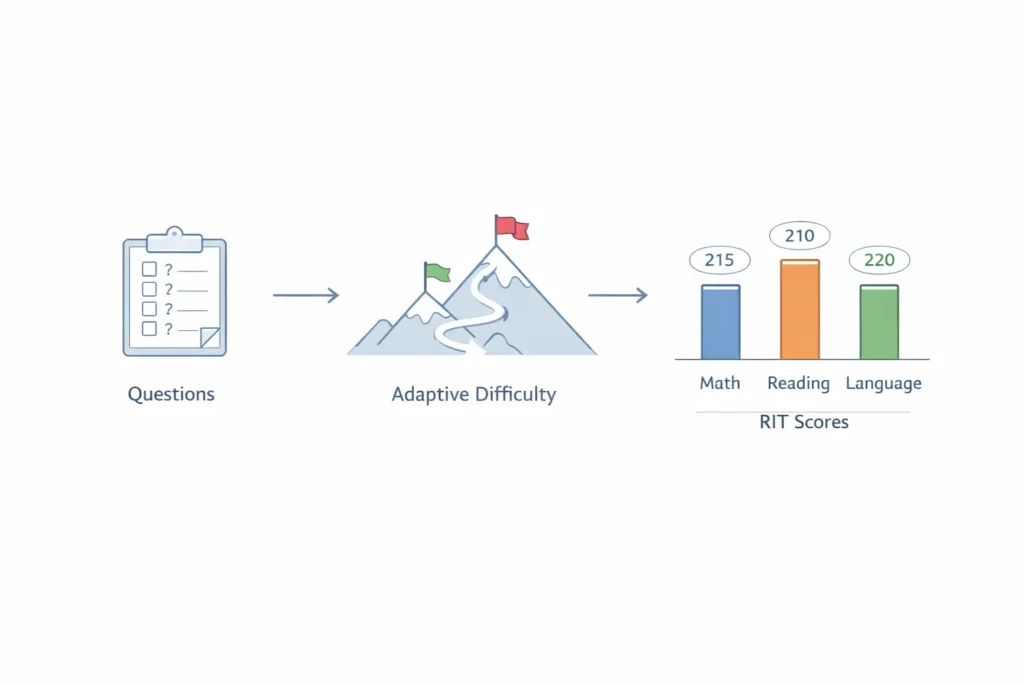
The MAP 2.0 post assessment (Measures of Academic Progress) is an adaptive test used in many U.S. schools. It adjusts difficulty based on student responses.
That means:
- Get a question right → next one gets harder
- Get it wrong → next one gets easier
So instead of fixed “answers,” the test builds a personalized path for each student.
Why “MAP 2.0 Post Assessment Answers” Searches Don’t Work
Let’s challenge a common assumption:
If you think you can find a fixed answer sheet online, that’s not how this test works.
Here’s why:
1. Adaptive System
No two students get the same sequence of questions.
2. Large Question Pool
Thousands of questions rotate across tests.
3. Skill-Based Evaluation
It measures understanding, not memorization.
So chasing “answers” is actually the slowest way to improve.
What You Should Focus On Instead
If answers aren’t fixed, what is predictable?
The structure.
Most MAP 2.0 post assessments focus on consistent skill areas:
Math
- Algebra basics
- Fractions and ratios
- Geometry
- Word problems
Reading
- Main idea and theme
- Vocabulary in context
- Inference
- Text structure
Language Usage
- Grammar
- Sentence structure
- Punctuation
If you master these, your score improves regardless of question variation.
How MAP Scoring Actually Works
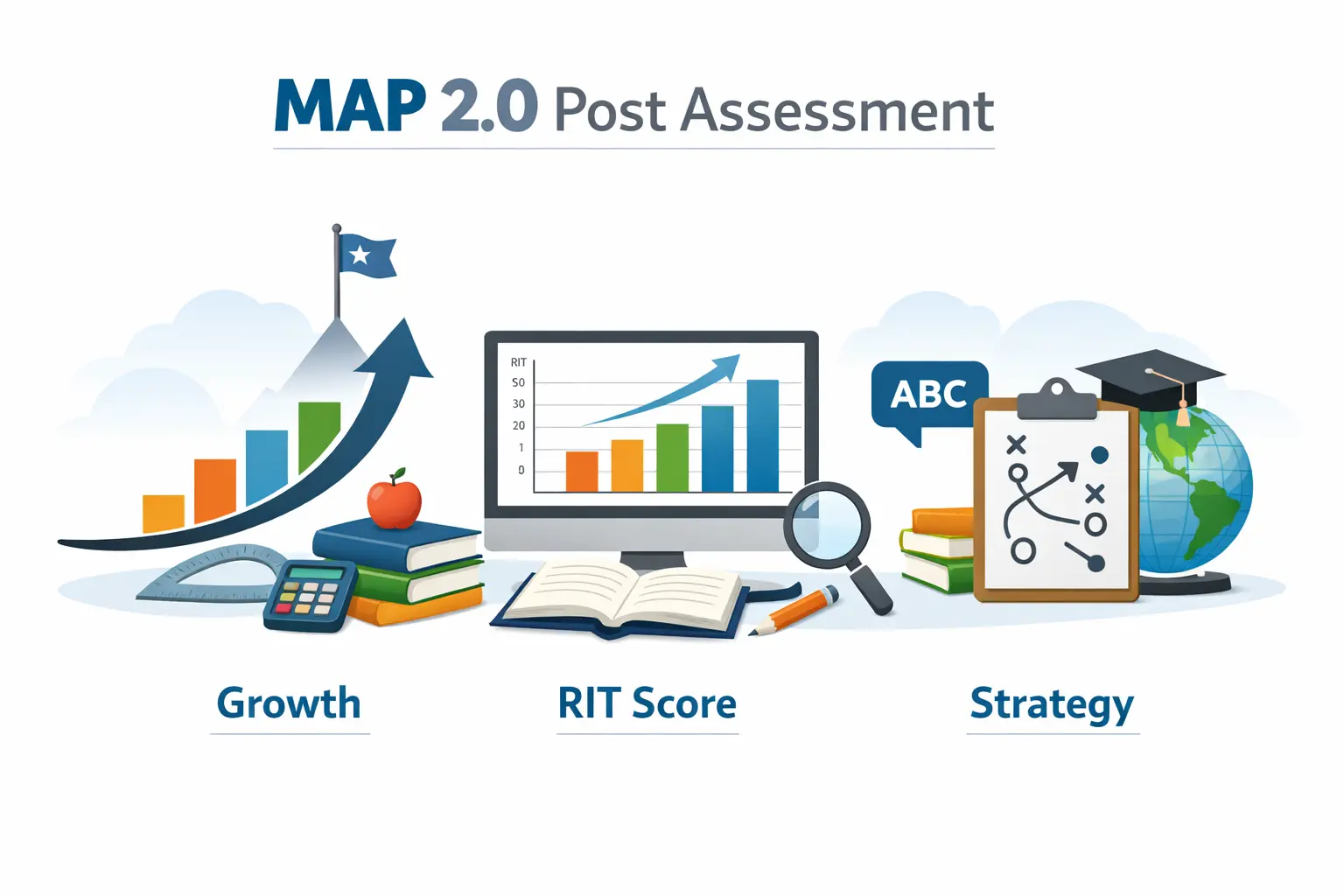
Instead of grades, MAP uses a RIT score.
Here’s the key idea:
- RIT score measures your level on a continuous scale
- It shows growth over time, not just pass/fail
Example
| Score Range | Meaning |
|---|---|
| 180–200 | Basic understanding |
| 200–220 | Grade-level proficiency |
| 220+ | Advanced |
Your goal isn’t to “get answers right.”
Your goal is to push your RIT score upward.
Smart Strategy: Reverse Engineer the Test
Instead of hunting for map 2.0 post assessment answers, do this:
1. Analyze Question Types
Look at practice tests and identify patterns:
- Multi-step math problems
- Reading passages with inference questions
- Grammar corrections
2. Practice Weak Areas Only
Most students waste time practicing what they already know.
Fix this:
- Identify lowest scoring domain
- Spend 70% of time there
3. Train for Difficulty Jumps
Since the test adapts, you’ll hit harder questions quickly.
Practice:
- Mixed difficulty questions
- Timed problem-solving
Common Question Patterns (And How to Solve Them)
Math Example Pattern
Question Type: Word Problem
A store gives a 20% discount on a $50 item. What’s the final price?
How to Think:
- 20% of 50 = 10
- 50 – 10 = 40
Instead of memorizing answers, train the process.
Reading Example Pattern
Question Type: Inference
What can be inferred about the character’s decision?
How to Think:
- Look for clues, not direct statements
- Ask: “What is implied but not said?”
Language Example Pattern
Question Type: Grammar Fix
Choose the correct sentence.
Focus on:
- Subject-verb agreement
- Punctuation
- Clarity
Biggest Mistakes Students Make
Let’s call these out directly:
1. Trying to Memorize Answers
Doesn’t work due to adaptive design.
2. Rushing Through Easy Questions
Early mistakes lower your difficulty level fast.
3. Ignoring Reading Passages
Most answers are in the text, just not obvious.
4. Not Reviewing Mistakes
If you don’t analyze errors, you repeat them.
Best Study Plan (That Actually Works)
Here’s a simple, effective plan:
Day 1–2: Diagnose
- Take a practice MAP-style test
- Identify weak areas
Day 3–5: Focus Training
- Practice only weak topics
- Do 20–30 questions daily
Day 6: Mixed Practice
- Combine all subjects
- Simulate test conditions
Day 7: Review
- Go through mistakes
- Understand why you got them wrong
Repeat this weekly.
Tools That Help (Without Cheating)
Instead of searching for map 2.0 post assessment answers, use:
- Khan Academy (math + reading skills)
- IXL (targeted practice)
- Official MAP practice resources
These build actual understanding, not shortcuts.
What Teachers Really Look For
This matters more than you think.
Teachers don’t just look at your score. They look at:
- Growth over time
- Consistency
- Effort
So even if you start low, improvement counts.
Can You Improve Fast?
Yes, but not by guessing.
Realistically:
- +5 to +10 RIT growth → achievable in weeks
- Requires focused practice
Shortcut thinking slows you down here.
Final Take
If you came looking for map 2.0 post assessment answers, here’s the honest truth:
You won’t find reliable answer sheets.
But you can outperform most students by understanding how the test works.
That’s the edge.
Focus on:
- Patterns, not answers
- Weak areas, not everything
- Strategy, not shortcuts
Do that, and your score won’t just improve once.
It will keep climbing every time you take the test.
FAQs About MAP 2.0 Post Assessment Answers
What are MAP 2.0 post assessment answers?
MAP 2.0 post assessment answers refer to the solutions students try to find after taking the test. However, because the exam is adaptive, there is no fixed set of answers available.
Can I find real MAP 2.0 post assessment answers online?
No, you won’t find reliable MAP 2.0 post assessment answers online. The system generates different questions for each student, which makes shared answer lists useless.
Why are MAP 2.0 post assessment answers not the same for everyone?
The test adapts in real time based on your responses. That means MAP 2.0 post assessment answers vary for every student, depending on their performance during the exam.
Is using MAP 2.0 post assessment answers a good strategy?
Not really. Relying on MAP 2.0 post assessment answers won’t help because the test measures skills, not memorization. Understanding concepts is far more effective.
How can I improve without MAP 2.0 post assessment answers?
Instead of searching for MAP 2.0 post assessment answers, focus on practicing math, reading, and language skills. Target weak areas and use adaptive learning tools.
Are there practice versions of MAP 2.0 post assessment answers?
There are no official MAP 2.0 post assessment answers, but practice questions and sample tests are available to help you understand the format and improve performance.
Do MAP 2.0 post assessment answers affect my final grade?
No, MAP 2.0 post assessment answers themselves don’t affect grades. The test is used to measure growth and academic progress, not just correct or incorrect responses.
How often do MAP 2.0 post assessment answers change?
Since the question pool is large and adaptive, MAP 2.0 post assessment answers effectively change every time a student takes the test.
What is the best way to prepare instead of memorizing MAP 2.0 post assessment answers?
The best approach is to practice regularly, review mistakes, and understand concepts deeply rather than relying on MAP 2.0 post assessment answers.
Are MAP 2.0 post assessment answers the same across all grades?
No, MAP 2.0 post assessment answers differ by grade level and skill level, as the test adjusts difficulty based on each student’s performance.