

The phrase “tech consulting majority stake financial sponsor today” sounds complex, but it’s showing up more and more in business news for a reason. Big money is moving into tech consulting firms, and it’s changing how these companies operate, grow, and compete.
If you’re trying to understand what’s going on behind the scenes, this guide breaks it down clearly without fluff.
What Does “Tech Consulting Majority Stake Financial Sponsor” Mean?
Let’s strip it down:
- Tech consulting → Companies that help businesses with IT, software, cloud, AI, cybersecurity, etc.
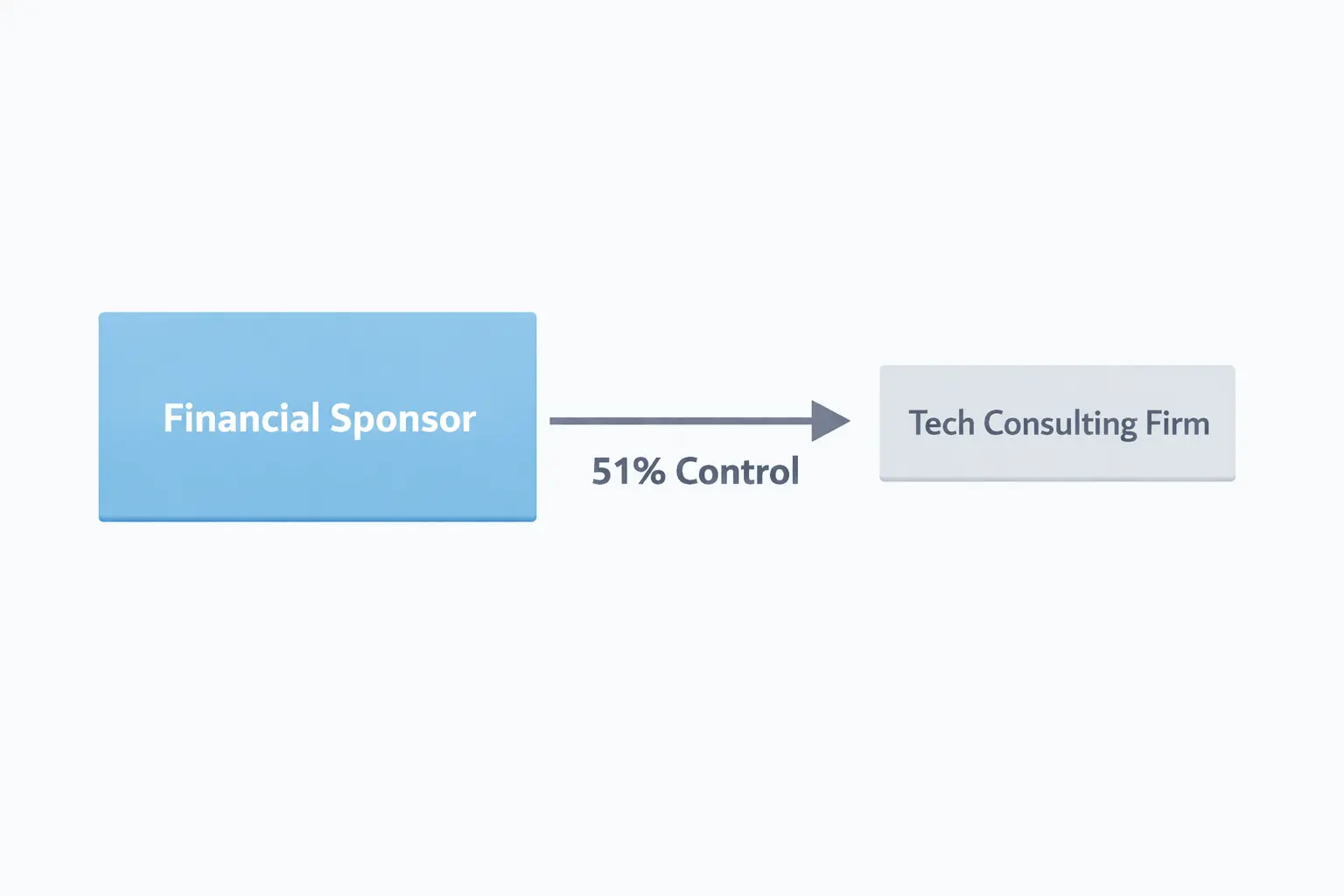
- Majority stake → Someone owns more than 50% of the company
- Financial sponsor → Usually a private equity firm or investment group
So, when you see tech consulting majority stake financial sponsor today, it simply means:
A financial investor has bought control of a tech consulting company.
This isn’t a small partnership. It’s control.
Why Financial Sponsors Are Targeting Tech Consulting Firms
This isn’t random. There are clear reasons why investors are aggressively buying into this space.
1. Predictable Revenue
Tech consulting firms often run on:
- Long-term contracts
- Retainer-based services
- Recurring IT support
That means stable cash flow. Investors love that.
2. High Demand Across Industries
Every business is becoming tech-driven:
- Banks need cybersecurity
- Retail needs eCommerce systems
- Healthcare needs data systems
So demand for consulting isn’t slowing down anytime soon.
3. Easy to Scale
Unlike manufacturing, tech consulting scales fast:
- Hire more consultants
- Expand into new markets
- Add new services like AI or cloud
Financial sponsors see this as a growth machine.
What Happens After a Majority Stake Is Acquired?
This is where things get interesting. A tech consulting majority stake financial sponsor today doesn’t just sit quietly. They make changes.
1. Aggressive Growth Strategy
Expect:
- Acquisitions of smaller firms
- Expansion into new regions
- New service lines
Growth becomes the top priority.
2. Operational Changes
Sponsors often bring in:
- New leadership
- Better reporting systems
- Cost controls
Sometimes this improves efficiency. Sometimes it creates internal friction.
3. Focus on Profitability
Let’s be honest. Financial sponsors want returns.
That leads to:
- Higher billing rates
- Leaner teams
- Focus on high-margin clients
The Upside for Tech Consulting Firms
Not everything is corporate pressure. There are real advantages.
Access to Capital
With a financial sponsor:
- Bigger budgets
- Ability to invest in new tech
- Faster expansion
Small firms suddenly play in bigger leagues.
Stronger Market Position
A sponsor-backed firm can:
- Win larger contracts
- Compete with global players
- Build stronger brand credibility
Faster Innovation
More money means:
- Investment in AI tools
- Automation systems
- Advanced analytics
This can actually improve service quality.
The Risks You Shouldn’t Ignore
Here’s where most articles go soft. Let’s not.
A tech consulting majority stake financial sponsor today also comes with real downsides.
Short-Term Thinking
Many financial sponsors operate on a timeline (often 3–7 years).
That can lead to:
- Decisions focused on quick returns
- Less focus on long-term innovation
Cultural Changes
Employees often feel the shift:
- More pressure
- KPI-driven environment
- Less flexibility
Some teams thrive. Others burn out.
Client Impact
Clients may notice:
- Price increases
- Staff changes
- Less personalized service
If handled poorly, this can damage relationships.
Why This Trend Is Growing Right Now
The keyword tech consulting majority stake financial sponsor today reflects a real-time trend, not a theory.
Here’s why it’s accelerating:
Digital Transformation Is Exploding
Companies are spending heavily on:
- Cloud migration
- AI integration
- Cybersecurity
Tech consulting firms are right in the middle of that demand.
Private Equity Has Too Much Capital
There’s a huge amount of “dry powder” (unused investment funds).
Financial sponsors need places to invest, and tech consulting checks all the boxes.
Fragmented Market
There are thousands of small consulting firms.
Sponsors see an opportunity to:
- Buy multiple firms
- Combine them
- Create a larger, more valuable company
This is called a roll-up strategy.
Real-World Example Pattern (How Deals Usually Work)
Even if you don’t see the exact keyword in headlines, the pattern is common:
- A private equity firm acquires 60–80% of a consulting company
- Founders keep a minority stake
- Growth plan is implemented
- Smaller firms are acquired
- Company is sold again at a higher valuation
This cycle repeats again and again.
Is This Good or Bad for the Industry?
It depends on your perspective.
If You’re a Founder
Good:
- You get liquidity (cash out partially)
- You still stay involved
- You scale faster
But:
- You lose control
- You answer to investors
If You’re an Employee
Good:
- More opportunities
- Bigger projects
- Better tools
But:
- More pressure
- Less job stability in some cases
If You’re a Client
Good:
- More professional systems
- Broader service offerings
But:
- Potential cost increases
- Less personal touch
What to Look for Before Partnering With a Financial Sponsor
Not all sponsors are the same. This is where many companies get it wrong.
If you’re considering this move, focus on:
Their Track Record
Ask:
- Have they invested in tech consulting before?
- Did those companies grow or struggle?
Their Time Horizon
Short-term vs long-term matters.
A short exit timeline often leads to aggressive decisions.
Cultural Fit
This gets ignored too often.
If their working style clashes with your team, problems will show up fast.
Future Outlook: Where This Trend Is Heading
The phrase tech consulting majority stake financial sponsor today will likely become even more common.
Here’s what’s coming next:
More Consolidation
Expect fewer but larger consulting firms dominating the market.
Specialization
Firms will focus on niches like:
- AI consulting
- Cybersecurity
- Cloud infrastructure
Higher Competition
With more capital in the space:
- Pricing wars may increase
- Talent competition will intensify
Final Thoughts – Tech Consulting Majority Stake Financial Sponsor Today
The rise of tech consulting majority stake financial sponsor today isn’t just a trend. It’s a shift in how the industry operates.
Financial sponsors bring:
- Speed
- Capital
- Structure
But they also bring:
- Pressure
- Expectations
- Trade-offs
The smart move isn’t to blindly accept or reject this model. It’s to understand it deeply and decide based on your position, whether you’re a founder, employee, or client.
Because once a majority stake is sold, the game changes.
Frequently Asked Questions (FAQ) – Tech Consulting Majority Stake Financial Sponsor Today
What is meant by “tech consulting majority stake financial sponsor today”?
It refers to a situation where a financial investor, usually a private equity firm, acquires more than 50% ownership in a tech consulting company. This gives the investor control over major decisions and future direction.
Why are financial sponsors investing in tech consulting firms today?
Financial sponsors are attracted to tech consulting because of steady demand, recurring revenue, and strong growth potential. Businesses across all industries need tech support, which makes this sector reliable and scalable.
How does a majority stake affect a tech consulting company?
Once a majority stake is acquired, the company often focuses more on growth, profitability, and expansion. This may include hiring new leadership, improving operations, and acquiring smaller firms.
Is selling a majority stake to a financial sponsor a good decision?
It depends on the goals of the founders. It can provide capital and growth opportunities, but it also means giving up control and adapting to investor-driven strategies.
What are the risks of a tech consulting majority stake financial sponsor today?
Some risks include short-term decision-making, increased pressure on employees, possible cultural changes, and higher costs for clients.
Do clients benefit from sponsor-backed tech consulting firms?
Clients may benefit from better resources, advanced tools, and broader services. However, they might also face higher pricing and less personalized service.
How do financial sponsors make money from these deals?
They typically grow the company’s value through expansion and efficiency, then sell their stake later at a higher price. This process is often planned over a few years.
What is a roll-up strategy in tech consulting?
A roll-up strategy involves acquiring multiple smaller consulting firms and combining them into a larger organization. This increases market share and overall company value.
Are all tech consulting majority stake financial sponsor deals the same?
No, each deal varies based on the investor, company size, and goals. Some focus on long-term growth, while others aim for quicker returns.
What should companies consider before accepting a financial sponsor?
They should evaluate the investor’s track record, growth strategy, time horizon, and cultural fit to ensure alignment with their long-term vision.