US Iran War Latest News: Rising Tensions, Oil Prices and the Risk of a Wider Global Crisis
The US Iran war latest news is once again dominating international headlines as military tensions between Washington and Tehran intensify and concerns grow over the future of one of the world’s most important oil-shipping routes.
What began as a confrontation centered largely on Iran and the United States has increasingly become a global economic story. Oil prices are climbing, shipping traffic through the Strait of Hormuz remains far below normal, and governments around the world are watching closely to determine whether the latest escalation will remain limited or develop into a much larger regional conflict.
The stakes are enormous.
The Strait of Hormuz is a critical route for global energy supplies, and any prolonged disruption could affect fuel prices, inflation, transportation and economic growth far beyond the Middle East.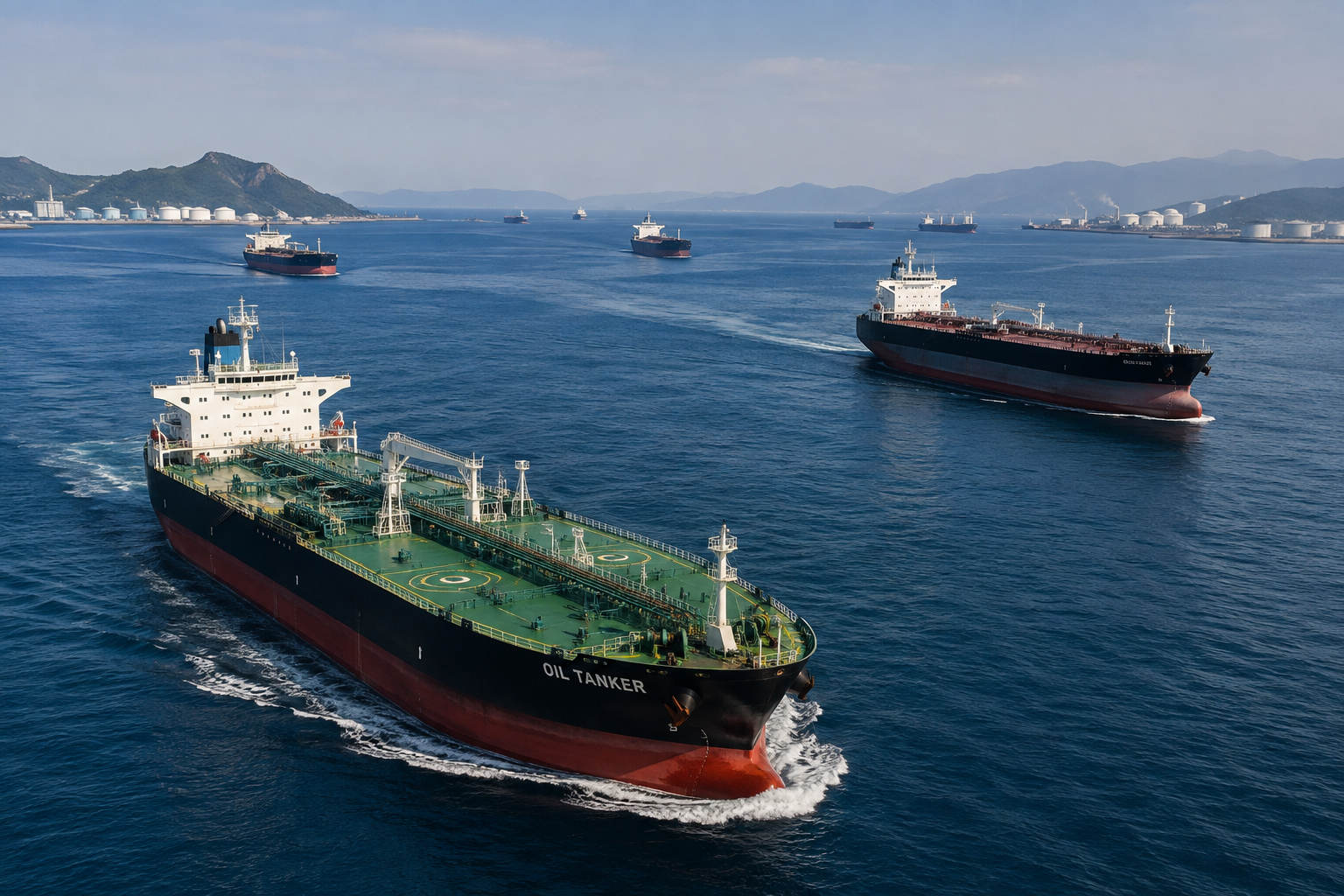
What Is the Latest US Iran War News?
The latest US Iran war news follows a renewed escalation after a period of relative calm.
The United States launched new strikes against targets connected to Iran’s Revolutionary Guard earlier this week. Iran responded with attacks targeting U.S. military positions in the region, including claims of strikes involving Kuwait and other Gulf locations. The escalation has raised fears that the conflict could spread beyond the direct confrontation between Washington and Tehran.
The situation has also become politically complicated in Washington.
U.S. Vice President JD Vance has sought to downplay the terminology surrounding the conflict, saying he would not describe the current situation as a traditional “war.” At the same time, however, American and Iranian forces continue to exchange threats and attacks, while military activity around the Strait of Hormuz remains a major concern.
This contradiction is one of the most interesting aspects of the current crisis: the language used by politicians may sound less dramatic, but the economic and military consequences are very real.
Why Is the Strait of Hormuz So Important?
The Strait of Hormuz is at the heart of the crisis.
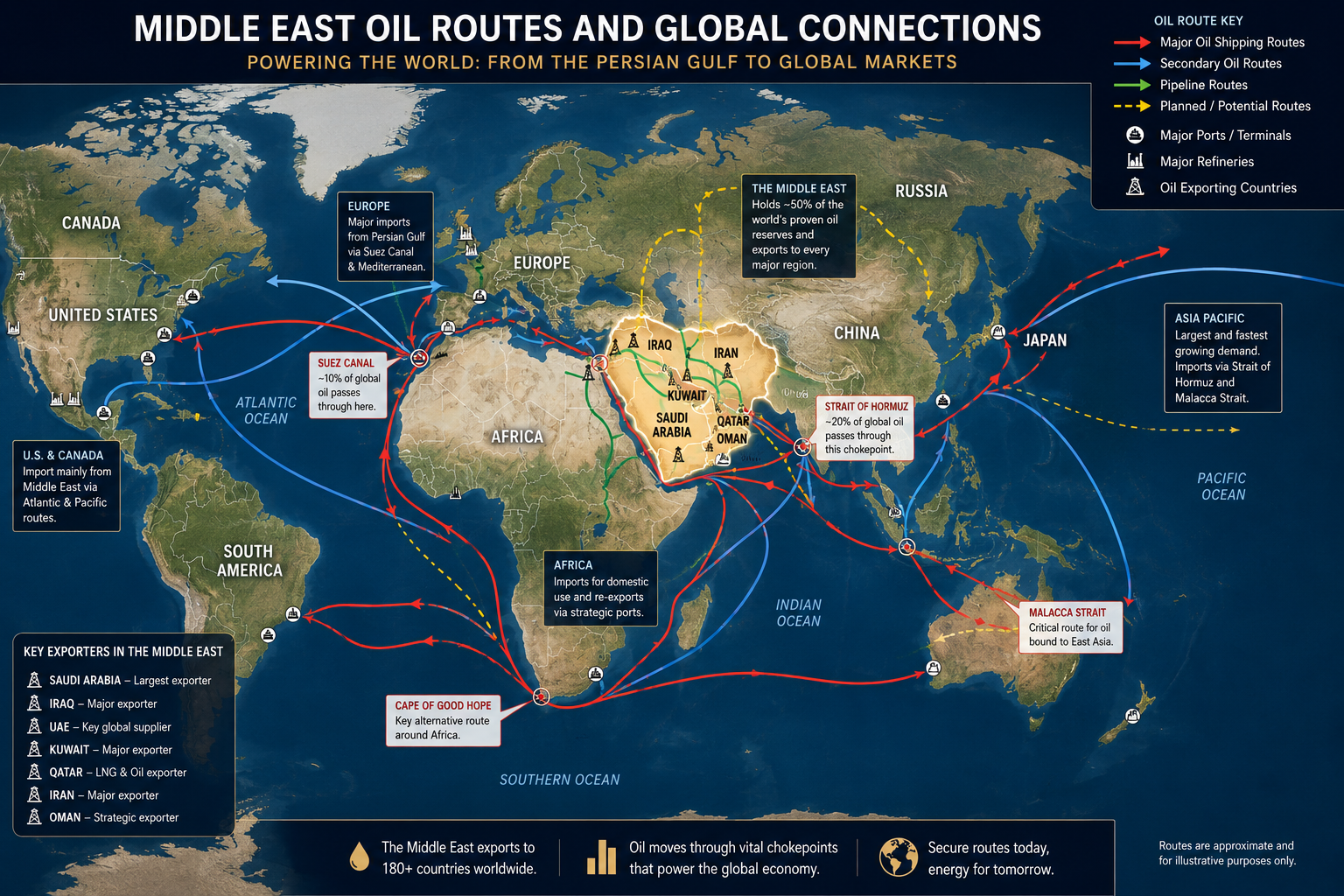
This narrow waterway connects the Persian Gulf with the Gulf of Oman and the Arabian Sea. Major oil-producing countries in the region depend on shipping routes through the area to deliver energy to customers around the world.
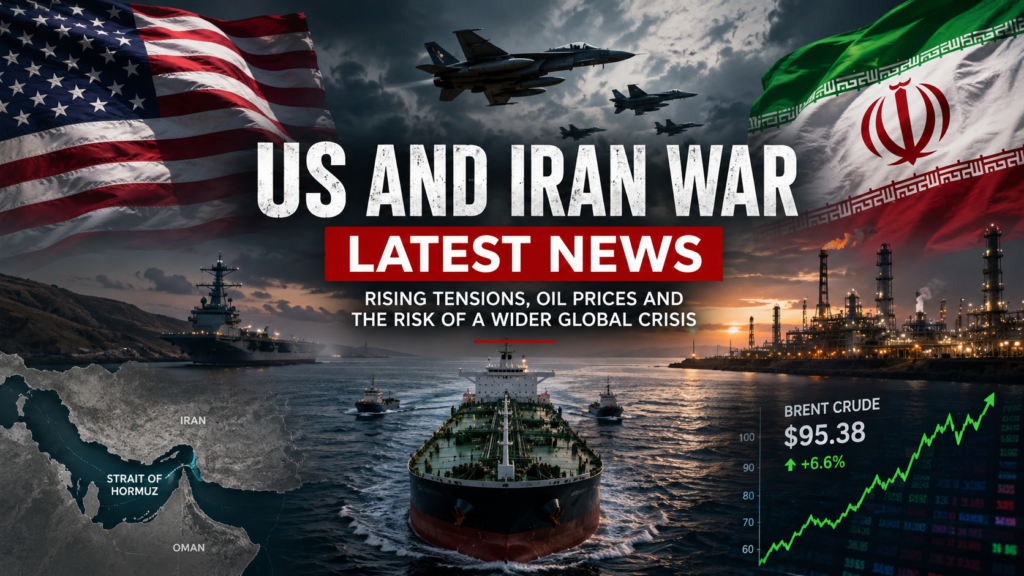
Before the conflict, approximately 125 commercial vessels crossed the Strait each day. Recent traffic has fallen dramatically. Reuters reported that only four commodity vessels crossed the waterway on Thursday, compared with a 10-day average of 15.
That decline matters because the global economy depends heavily on predictable energy supplies.
If ships cannot move safely, oil traders become nervous.
And when traders become nervous, prices can rise quickly.
Oil Prices Are Sending a Warning
One of the clearest signs of the conflict’s global impact can be seen in the oil market.
Brent crude has climbed to around $95 per barrel, while U.S. West Texas Intermediate has also risen sharply. Reuters reported that Brent gained 6.6% over the week to about $95.38 per barrel, while WTI climbed 8.8% to around $90.93.
Why does this matter?
Because oil is not just a fuel for cars.
It is an essential part of the modern economy.
Oil and petroleum products are connected to transportation, aviation, shipping, manufacturing, agriculture and countless industrial processes.
When crude oil becomes more expensive, businesses often face higher operating costs.
Those costs can eventually reach consumers.
How Could the Conflict Affect Ordinary People?
The effects of the conflict could eventually be felt by people who have never visited the Middle East.
Consider a simple example.
A truck carrying food needs diesel.
An airline needs jet fuel.
A factory needs energy to produce goods.
A shipping company needs fuel to move products across oceans.
If energy costs increase, each of these businesses faces higher expenses.
Some companies absorb the costs.
Others pass them to customers.
That can contribute to higher prices for transportation, food and consumer products.
This is why the US Iran war latest news is important even for people who are thousands of miles away from the battlefield.
A military conflict can become an economic conflict without a single missile being fired near a particular country.
Inflation Could Become a Bigger Problem
Another major concern is inflation.
Oil prices are closely connected to inflation because energy is used throughout the economy.
If crude oil remains expensive for an extended period, transportation and production costs can rise.
Central banks then face a difficult choice.
If inflation stays high, they may be forced to keep interest rates higher for longer.
But high interest rates can slow economic growth.
This creates a dangerous combination:
Higher energy prices + persistent inflation + weaker economic growth.
If the situation becomes severe enough, economists could begin worrying about stagflation—a period in which inflation remains high while economic growth becomes weak.
The Conflict Is Also Affecting Shipping
Oil is not the only concern.
International shipping is also under pressure.
When vessels enter a high-risk area, insurance becomes more expensive. Companies may decide to avoid certain routes or delay shipments.
Alternative routes can take longer and cost more.
That creates another chain reaction:
Conflict → shipping risk → higher insurance → higher transportation costs → higher prices.
For a world economy already dependent on complex international supply chains, a prolonged disruption could create serious problems.
Could the Conflict Become a Wider Regional War?
This is perhaps the biggest question surrounding the current crisis.
Iran has already responded to U.S. military actions with attacks on American-linked targets in the region. Any further escalation could potentially involve more Gulf states or threaten additional infrastructure.
The more countries become involved, the more difficult it becomes to contain the conflict.
A wider regional war could threaten oil production facilities, ports, pipelines and shipping routes.
That would transform the crisis from a military confrontation into a major global energy emergency.
There Are Also Signs of a Possible Way Out
Despite the military escalation, diplomacy has not completely disappeared.
The United States and Iran have previously explored temporary agreements, while regional countries have attempted to maintain diplomatic channels.
The challenge is that Washington and Tehran have very different demands.
The United States wants Iran to stop threatening shipping and accept broader restrictions, while Iran wants its sovereignty, economic interests and control over its strategic position protected.
The lack of trust between the two sides makes a diplomatic breakthrough extremely difficult.
Nevertheless, diplomacy remains the most important path toward reducing the economic risks.
What Happens Next?
The next few weeks could be critical.
If the fighting decreases and shipping through the Strait of Hormuz returns toward normal, oil prices could fall as the market’s risk premium disappears.
But if attacks continue and shipping remains restricted, oil prices could rise further.
The global economy is therefore watching several key indicators:
- Oil prices
- Tanker traffic through the Strait of Hormuz
- U.S. military operations
- Iranian retaliation
- Gulf-state involvement
- Diplomatic negotiations
- Global inflation
- Central-bank interest-rate decisions
Each development could change the economic outlook.
Final Thoughts
The US Iran war latest news is about much more than military strikes.
It is about energy security, international trade, inflation, financial markets and the stability of the global economy.
The Strait of Hormuz demonstrates just how interconnected the modern world has become. A conflict in the Middle East can influence the price of oil in international markets, the cost of shipping across oceans and eventually the prices consumers pay in countries thousands of miles away.
For now, the biggest question is not simply who has the military advantage.
The bigger question is whether the conflict can be contained.
If tensions decline, global energy markets may gradually stabilize.
If the conflict expands, the world could face a much larger oil and economic shock.
That is why people searching for the US Iran war latest news are not merely looking for battlefield updates. They are trying to understand what the conflict could mean for the future of the global economy.
And as long as the Strait of Hormuz remains under pressure, the entire world will be watching.